Props and Toys for Your Home Pilates Practice
Props and Toys for Your Home Pilates Practice
I’m often asked what kind of equipment I recommend for a home-based Pilates practice to supplement studio time, and where to purchase. Here are some of my favorites. With the exception of the Stability Ball or BOSU, none take up much space.
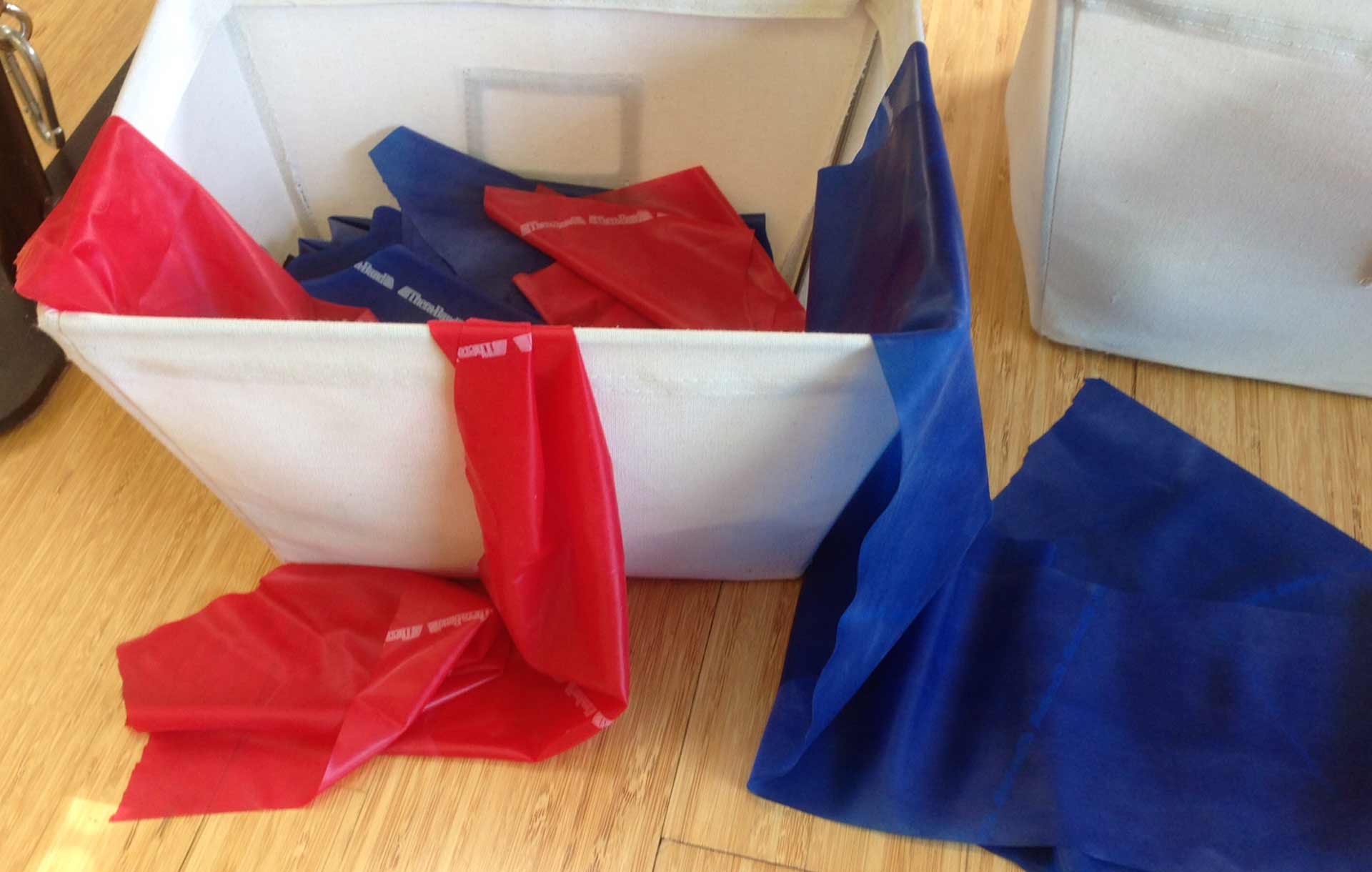
Flex Band
This is hard to beat as a travel prop. It can be used to imitate much of the shoulder/arm work we do in classes by tying it to something sturdy. It can also be used to simulate some of the feet-in-straps exercises on the Reformer. Approximately $10-12.
Inflatable Balls
There are so many balls with so many uses in Pilates. Two of my favorites are the 8” or 12” mini-stability balls that can make a number of mat exercises more challenging. Approximately $8-12.
Foam Rollers – Rollers come in varying densities – firm, medium or soft – as well as a few different lengths. When in doubt, go for the medium density. The soft rollers tend to warp quickly and the firm rollers can be a little too hard for some people. Prices online range from $9 to $50. I use “magic rollers” from Balanced Body, which is firm with extra padding. They are 36” which works well for most heights and purposes.
Fitness Circle (aka “ring of fire”) – This is a nice way to add some resistance and challenge to many mat exercises. Many sellers include exercise DVDs to give you some ideas. $25-$35 online.
Stability Balls – Select a ball size based on height. 55cm is suited to 4’8” – 5’3”. 65cm is suited to 5’3” – 5’11”. 75cm is suited to 6’ or taller. When seated on the ball, thighs should be fairly parallel to the floor and never below the knees. They are many good brands. Prices are typically $25-$35. (Hint: they take a lot of effort to inflate! The last time I inflated one it took me a half-hour.)
BOSUs (the half-domes that are usually blue) – BOSUs are well made by many brands and generally come in one size. This is for the fitness enthusiast who needs a new challenge, and it may not be the first place to start for most people. Approximately $100.
Where to purchase
An internet search will yield lots or options. Two of the main suppliers for the Pilates industry are:
Merrithew Health & Fitness (the parent company of STOTT PILATES and maker of all the big sturdy equipment in many studios, and my exercise method). Pluses: The equipment is always top-of-the-line and indestructible. Minuses: Most other equipment and props come from Canada and can take a while or be expenseive. Their flex bands and the 12” Stability Ball are available through Amazon. It’s hard to beat their quality and prices on these two items.
Balanced Body makes great quality equipment. I use foam rollers and fitness circles from BB. This company is US-based and speedy. It’s possible to find cheaper products but the quality may be variable.
How much of this do you really need?
That all depends on you. Start with the smaller, less expensive props. A foam roller, a flex band and an inflatable ball or will take you a long way without spending too much money. Let me know if you’ve purchased a new prop and need a refresher on what to do with it.
Share

Back Pain Be-Gone
Back Pain Be-Gone
Bad back. What do you do?
A friend and client texted me and said she was in pain but had signed up for a group class the next day. She asked, “Should I go? It usually makes me feel better.”
Back pain will probably affect up to 80% of us. If that seems mind-boggling, it’s that we walk around for decades out of alignment without pain until the damage is already done and the tissues/muscles are strained. It’s all made worse by hovering over steering wheels and little gadgets.
You might be thinking, “I do Pilates, shouldn’t I be immune?” It certainly reduces pressure on joints and soft tissue going forward (depending on your diligence to good alignment), but it can’t reverse cumulative pressure on discs and connective tissue of your past. Nor can it reverse the aging process. Discs lose their gel-like makeup as we age.
This is what Pilates CAN do for you and your back:
- Strong core muscles –Pilates is known for the focus on abs, glutes, and upper back that support good posture and efficient movement. There’s even more to it: Pilates stimulates the deep muscles of the spine. This can decrease pressure on the discs by holding the spine in its neutral position and supporting it during movement.
- Good body mechanics so that you are walking, sitting, lying and picking things up using good alignment more of the time.
- Increased flexibility that situates the pelvis in neutral so that you are not being tugged forward or backward, putting pressure on the back, shoulders, and neck.
- Total body strength and conditioning. It’s not just vanity. For example, strong glutes take pressure off your back (and knees, btw).
None of the following comments substitute for what your doctor or physical therapist recommends for you, as there is a universe of back troubles, but this is a rough idea of where Pilates can fit into back pain recovery for many people. Address any acute pain with your doctor first. Then come back to Pilates and make a habit of it.
While experiencing back pain
- Walk fast enough to get your arms swinging (faster than walking the dog). Walking at this speed takes pressure off your back.
- Stretch to your comfort level. It’s incredibly unfair, but when you back “goes out,” often other parts of your body get tight too, since they are compensating. Stretch hamstrings, hip flexors, pecs, back, feet, and shoulders.
- Apply heat and/or cold – You can read up or call your doctor to consider which one (or both) makes sense for you.
- Get a massage – Consider getting a chair massage right away (or full body massage if you can). Let the massage therapist know you are in pain and where, and speak up if something doesn’t feel right.
Repeat. Many people take ibuprofen for some relief. Some people go to chiropractors, as well, but those are an individual decision.
Out of pain, but the memory of it is still vivid in your mind
- Take a private or two if you can. You can get back on the wagon while focusing on exercises that keep you in a range of motion that doesn’t set you back. You’ll stretch some muscles, strengthen your core safely, and learn what you should avoid in a group class. You should leave a session feeling good or better than when you arrived.
- In group classes – tell your instructor the status of your back pain. Be brave and skip out on exercises that could be too much, too soon. Trust your gut on this.
Recovered
What does recovered really mean? Some people feel 100% better. Some people get to 90% but feel there’s a lingering hint of discomfort. However you define recovered, give your back the care it wants from here on out. That does not mean compromising your fitness in the slightest. But you can still be smart about which exercises are for you and which are not. The back pain sufferers who make it all the way learn about how their body moves, and consistently do Pilates.
Response to my friend
Without knowing where on the spectrum of discomfort she was, I responded, “I recommend you cancel, but you know your body better than anyone else. If you do go, here are some thoughts:
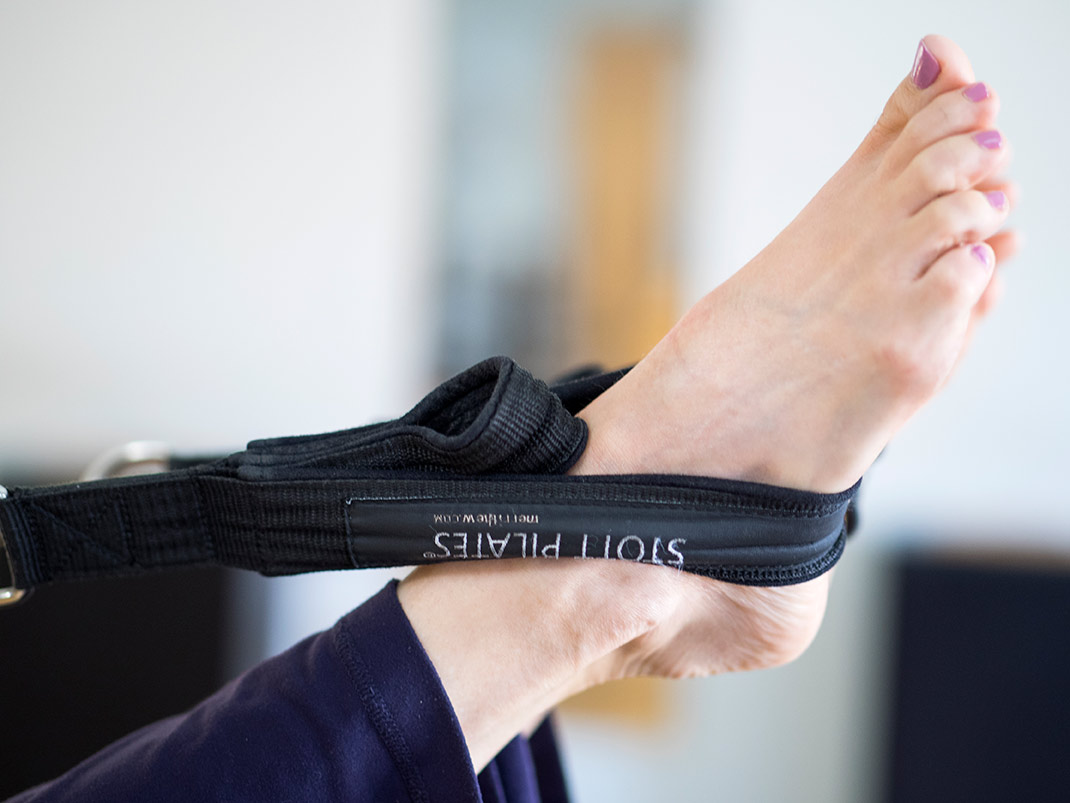
- Foot work and Feet in Straps could be helpful on light springs, as they focus on alignment. That is IF you can get on the carriage without wincing. If you are in pain, go home!
- Other exercises that keep you in neutral – possibly with no springs or weighted balls;
- Opt out of anything that doesn’t feel right from the beginning and be okay with that.”
She cancelled her spot in the group class. Two weeks later she set up four privates to focus on her needs. She found it provided immediate relief for her body. It was also practical in that she learned a few things she could do at home to increase her comfort and speed her recovery. Possibly just as importantly, it gave her a boost of inspiration and hope. It’s very easy to feel defeated by a bad back and frustrated that all your hard work has gone out the window, or that you’ll never be fit again etc. It’s not true, but you do need to have some patience and commitment to the healing process.
Share
Before Your Next Walk
Before Your Next Walk
Here are a few quick fixes for better posture while walking.
- Massage Your Feet
You’ll wake up some feet muscles not to mention the fascia and connective tissue. This leads you is to a better grip on the floor. You end up using more of the muscles around the hips and then up the kinetic chain for great alignment – a favorite theme in Pilates. Any kind of ball can work just fine for this: tennis ball, dog ball or a foot massager (often called a “peanut foot massager” – shaped like a peanut).
- Lift your sternum for a 3-for-1 deal
Lifting your head and shoulders is a good idea too, but for many people when cued to lift their sternum they lift all three.
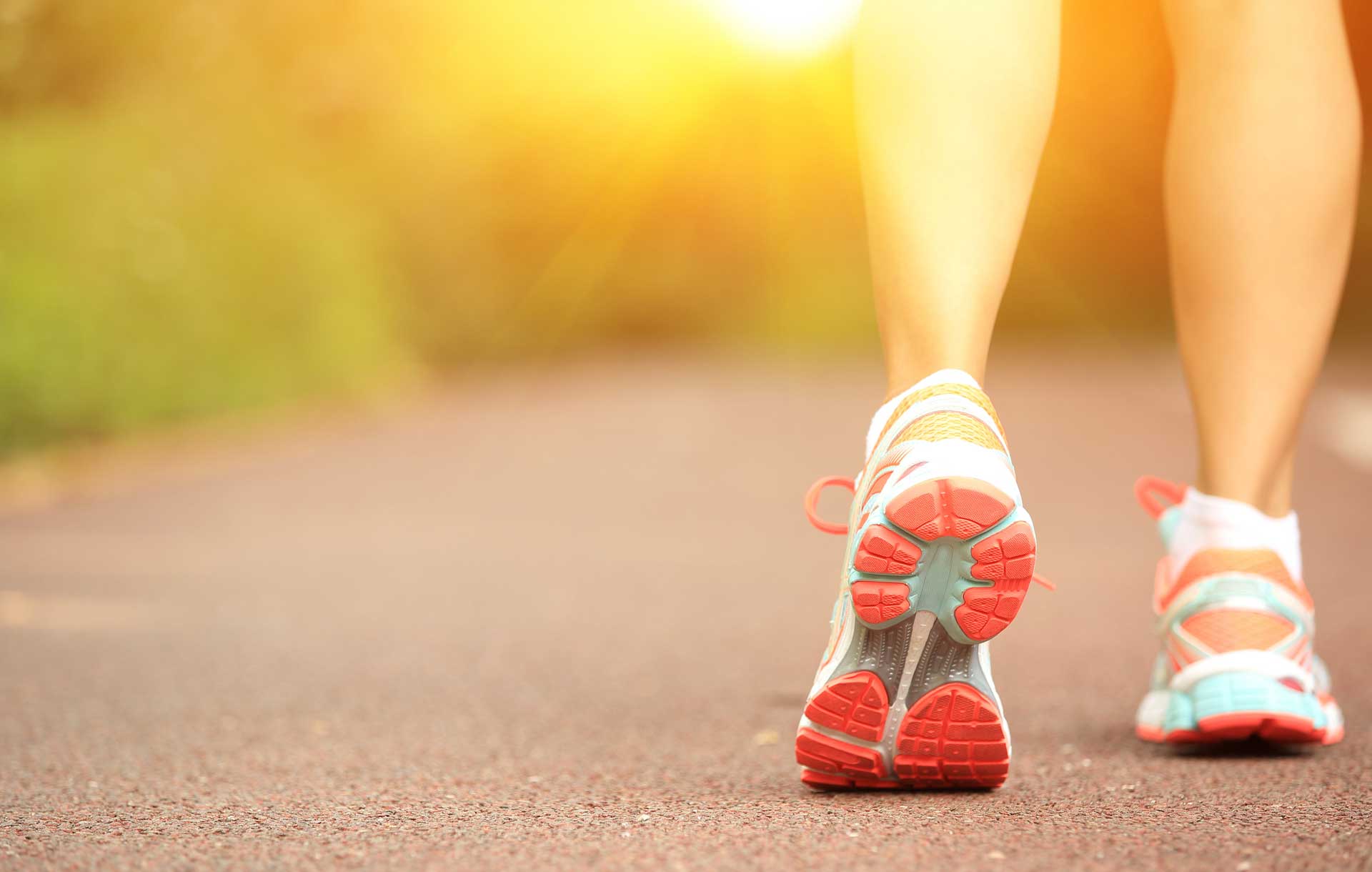
- Strike with your heel
As you set out to walk, strike with your heel and see if you can cue your glutes to work. If you sternum, shoulders and head are lifted, then you should find your abs kick in too, to keep you upright.
While it’s not realistic to think about your walk once you get going, a few seconds of detail at the beginning is a great habit to develop.
Share
Props and Toys for Your Home Pilates Practice
Props and Toys for Your Home Pilates Practice
I’m often asked what kind of equipment I recommend for a home-based Pilates practice to supplement studio time, and where to purchase. Here are some of my favorites. With the exception of the Stability Ball or BOSU, none take up much space.
Flex Band
This is hard to beat as a travel prop. It can be used to imitate much of the shoulder/arm work we do in classes by tying it to something sturdy. It can also be used to simulate some of the feet-in-straps exercises on the Reformer. Approximately $10-12.
Inflatable Balls
There are so many balls with so many uses in Pilates. Two of my favorites are the 8” or 12” mini-stability balls that can make a number of mat exercises more challenging. Approximately $8-12.
Foam Rollers – Rollers come in varying densities – firm, medium or soft – as well as a few different lengths. When in doubt, go for the medium density. The soft rollers tend to warp quickly and the firm rollers can be a little too hard for some people. Prices online range from $9 to $50. I use “magic rollers” from Balanced Body, which is firm with extra padding. They are 36” which works well for most heights and purposes.
Fitness Circle (aka “ring of fire”) – This is a nice way to add some resistance and challenge to many mat exercises. Many sellers include exercise DVDs to give you some ideas. $25-$35 online.
Stability Balls – Select a ball size based on height. 55cm is suited to 4’8” – 5’3”. 65cm is suited to 5’3” – 5’11”. 75cm is suited to 6’ or taller. When seated on the ball, thighs should be fairly parallel to the floor and never below the knees. They are many good brands. Prices are typically $25-$35. (Hint: they take a lot of effort to inflate! The last time I inflated one it took me a half-hour.)
BOSUs (the half-domes that are usually blue) – BOSUs are well made by many brands and generally come in one size. This is for the fitness enthusiast who needs a new challenge, and it may not be the first place to start for most people. Approximately $100.
Where to purchase
An internet search will yield lots or options. Two of the main suppliers for the Pilates industry are:
Merrithew Health & Fitness (the parent company of STOTT PILATES and maker of all the big sturdy equipment in many studios, and my exercise method). Pluses: The equipment is always top-of-the-line and indestructible. Minuses: Most other equipment and props come from Canada and can take a while or be expenseive. Their flex bands and the 12” Stability Ball are available through Amazon. It’s hard to beat their quality and prices on these two items.
Balanced Body makes great quality equipment. I use foam rollers and fitness circles from BB. This company is US-based and speedy. It’s possible to find cheaper products but the quality may be variable.
How much of this do you really need?
That all depends on you. Start with the smaller, less expensive props. A foam roller, a flex band and an inflatable ball or will take you a long way without spending too much money. Let me know if you’ve purchased a new prop and need a refresher on what to do with it.
Share
What’s Your Word of the Year?
What’s Your Word of the Year?
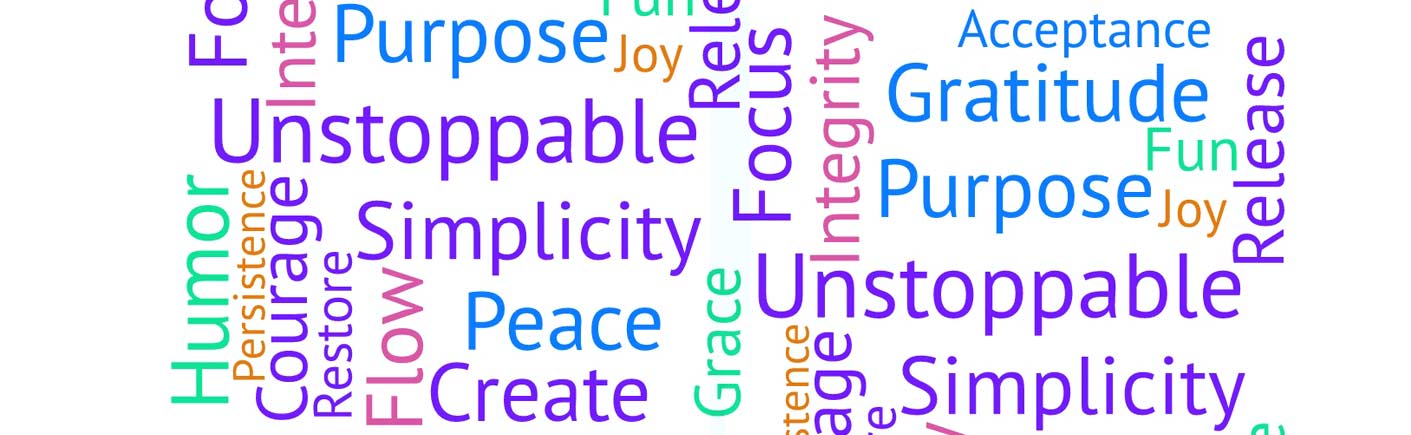
As we close out the year and gear up for some newness, rather than thinking up a New Year’s Resolution, have you ever considered choosing a Word of the Year?
A Word of the Year is a personal mantra or motto of sorts, or guiding star for how you want to steer your life in the next year. You might choose a word that suits you as a new attitude, or source of strength depending on what you anticipate the year holding for you. One aspect that’s nice about it is that there is no way to fall short! Often we set lofty goals for ourselves that are hard to attain and then feel disappointment if we don’t reach it. Or the goal can feel like another item on the to-do list. On the other hand, a Word of the Year can serve as you own private cheerleader or a gentle nudge. It can be a
verb, a noun, an adjective. You choose. Here are a few words to spur your thoughts.
Share

Ah-HA. It All Makes Sense. Understanding Muscle Types.
Ah-HA. It All Makes Sense. Understanding Muscle Types.
A Primer on Muscles
With kids back in school, let’s do a quick primer on muscle fundamentals for adults. Muscles are made up of different types of fibers. Some are meant to be powerful and allow you big bursts of movement. We call these mobilizers and they are made up of fast-twitch fibers. They are meant to move your joints, but they fatigue easily. Think squats and the power in your quads and hamstrings. You couldn’t do squats all day. You would fatigue.
Other muscles are stabilizers and they are made up of slow-twitch fibers. They don’t fatigue quickly and are designed to be ON all the time keeping you stable and your skeleton upright. They are deeper in the body and are designed to keep the joints supported.
Your transverse abdominus – the big abdominal muscle that wraps around you like a seatbelt – is a slow twitch, stabilizing muscle for the pelvis. There are many stabilizers at every joint of the body.
In Pilates First We Stabilize, Then We Mobilize
Pilates is famous for its focus on core muscles. It is also about stabilizing the joints first, then working the mobilizers. When all is functioning correctly, the stabilizers keep the joints steady and supported, and provide challenge or resistance to the mobilizers. The result: a 2-for-1. You get effective work for the big muscles AND you protect your joints.
If your stabilizers are not doing their job, then the mobilizers take over. But they are not designed for that job and don’t do it effectively or efficiently. They allow your joints to be pulled out of alignment, which sets you up for injury.
For example, when a weight lifter blows out his shoulder, often what happens is the rotator cuff muscles supporting the shoulder joint are not engaged or sufficiently trained to keep the joint in a safe range. The deltoids, biceps and other big muscles take on a lot of weight, but without the joint properly stabilized. (Something like 80% of rotator cuff injuries are the result of rotator cuff muscle weakness or instability.)
Big Payoff
It takes a little patience to activate your stabilizers first, but the rewards are huge. You are retraining ALL of the muscles – mobilizers and stabilizers, giving you toned muscles and good movement patterns that serve you in fitness and daily life.

Exercise Habits: Architecture for Your Day
Habits: Architecture for Your Day
A few years ago I had a lot of fun asking other Pilates instructors about their own exercise routines. I asked how often they do Pilates, how often they do cardio, and how they deal with busy schedules and the never ending challenge of fitting exercise into their days. Here were some of my favorite comments:
News Flash: We do Pilates on our living room floors, not just using the apparatus.
“Almost daily I do a mat-based restorative-focused exercises integrating breath to rehab my back from surgery.” I love the equipment, but most of the time I use what I have at home.”
“7 times per week (almost always at home on the floor) for 30 minutes: 10 minutes of core strengthening, 10 minutes of targeted stretching, 10 minutes strengthening hips.”
Anne: 3 times per week for an hour each, but less if I am tight on time (20, 30 minutes… whatever I have). One of those workouts is on my living room floor on a Saturday or Sunday. The other two workouts are using the apparatus. When my daughter was about 6 she had a Saturday morning class. I did Pilates in the parent waiting area. The staff offered me a yoga mat and thought nothing of me exercising in their lobby. I’ve also been known to do Pilates in hospital waiting rooms, on the sidelines of a soccer field, or airport lounges.
Yes, Cardio matters too.
“When busy, I walk or jog to the studio to get it in.”
“Biking is my commute vehicle, so it’s built into my day.”
I run 6-7 times per week: 2-3 more intense workouts, a long run, and the rest easy
Anne: I do one hilly walk/hike per week, usually in the cemetery nearby, one swim, and one wild-card weekend activity with family. That’s often a leisurely bike ride or hike (skiing in the winter). If we are too busy for a family activity then my husband and I give each other a chance to get exercise on our own.
Here’s what instructors had to say about consistency, or other thoughts on making your exercise a way of life.
“When rehabbing you don’t have to run a marathon to get cardio, but just anything to get blood flowing and move the joints to promote healing.”
“I tend to get out the door early otherwise I wouldn’t have time to run. In terms of (Pilates) and stretching, I find doing a little bit consistently is better than doing a lot inconsistently. My rule of thumb is if it is 10 minutes or less I can squeeze it in before bed, between clients, or whenever I have some spare time.”
“Although it’s sometimes hard to get motivated (to go to the pool early), even a half hour of swimming laps feels like a good workout. It’s especially nice if I am sore, it really seems to loosen things up.”
“Some clients turned me on to the Map My Run app, which is a great way to stay motivated. When I see those numbers on my mobile device, it reminds me to keep it moving.”
Anne: “When my daughter was a toddler I never missed the opportunity to stretch at playgrounds. Now that she is older I approach it differently. If the week is looking like my time is getting squeezed then I forgo the alone time working out and do Pilates on my living room floor while she does homework or while I am waiting for dinner to cook. She has gotten used to the fact that grown-ups, too, need to move to stay well.
As you can read here, we often need to get creative to include exercise in our days. We are undeterred by short workouts. As opportunities arise, we move, stretch, or target our specific needs, even if just 10 minutes per day. Almost everyone walks, bikes or runs as part of their commute. Not everyone can do that, but if you can, go for it.
You are an experiment of one. Enjoy the exploration process in finding what works for you. Wishing you the love of movement!

Pilates Is Strength Training
Pilates is Strength Training
If you are an exercise enthusiast you probably have some awareness that your body needs different kinds of exercise: strength training, cardiovascular fitness, and flexibility. So where does Pilates fit into the scheme of thing? In short: strength training balanced with flexibility. No cardio, although it beats sitting on the couch!
In Pilates, we are building muscle using spring resistance from the Reformers and Springboards, your own body weight, or both.
Here are a few other things to keep in mind.
In Pilates, we are working from the inside out. Yes, arms and legs get work. They are layered on after establishing a stable core. Newcomers and people with injuries may need to focus mostly on core muscles, with less emphasis on arms and legs, until s/he can stabilize the core. Without stabilizing the core and good alignment, it’s not Pilates. Unlike most other exercise methods, as you get better at Pilates, it gets harder!
Some people want to bulk up their muscles and have heavier loads than what Pilates spring resistance can offer, such as weight-lifting or gym equipment. For the average person who wants all over muscle tone and strength, Pilates offers that and more.
Flexibility is a key piece of Pilates. We are operating on the muscle-balance principle as well as dynamic stretching. Overworked muscles are usually accompanied by underworked opposing muscles. When we balance out any part of the body by strengthening the weaker muscles, we lessen the burden (and tightness) of the grumpy, perpetually tight muscles. Low and behold, core muscles (abs, spine, glutes, inner thighs) take the burden off tight quads, hamstrings, necks, and shoulders.
As with all strength training, you want to aim for 2-3 Pilates sessions per week. If it’s not possible for you to get to the studio that often, then certainly build a home practice with a handful of exercises that target your biggest needs. It also helps you get the most from your studio time. You can also use those core muscles in other sports or activities! How fast you get to your destination is a question of building your Pilates practice. Consistency matters.